

Reacher Carmela
How to Become a UGC Creator: A 30-Day Launch Plan
A concise 30-day UGC creator launch plan covering portfolio samples, opportunity screening, pitches, contracts, usage rights, and disclosures.
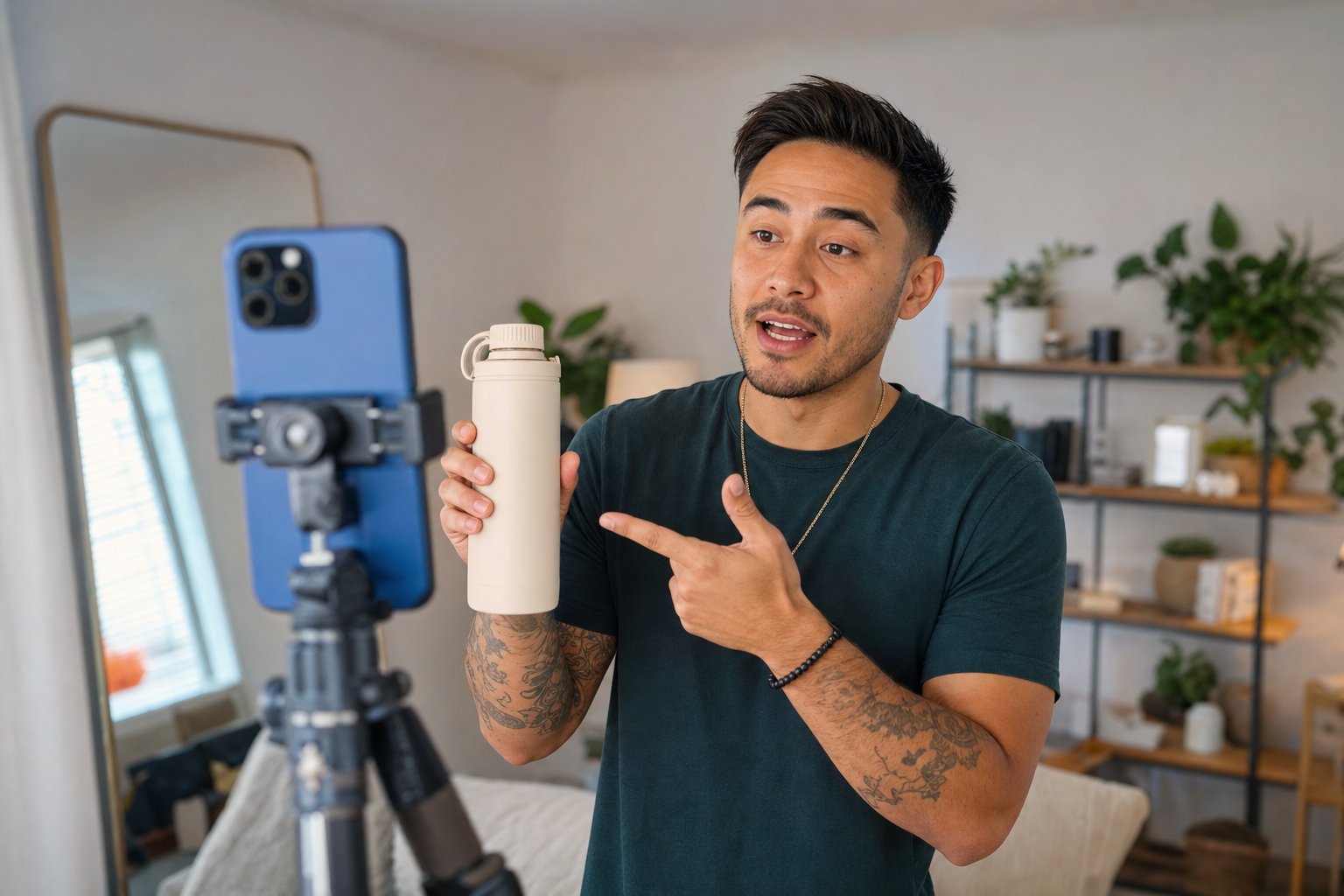
A month of practical creator milestones
Becoming a UGC creator starts with evidence that you can turn a brief into usable content and manage the business terms around it. This 30-day plan is a concise launch checklist: each week ends with concrete deliverables for your portfolio, opportunity screening, pitch, contract, usage rights, and disclosure process.
This is not an earnings schedule or a promise that a brand will hire you in 30 days. Use it to build a repeatable operating foundation. For a deeper explanation of skills, pricing factors, production, and client management, read the comprehensive UGC creator workflow.
Key takeaways
- Week 1 defines your service, target categories, production limits, and opportunity-screening rules.
- Week 2 creates a compact portfolio that demonstrates distinct briefs and formats without pretending to be paid work.
- Week 3 builds a factual pitch and a process for verifying brands, scope, rights, compensation, and contact details.
- Week 4 turns interest into a documented workflow for contracts, revisions, licensing, disclosure, delivery, and invoicing.
- At day 30, diagnose the next bottleneck from evidence rather than rewriting everything or chasing unsupported rate claims.
Before day one: define the outcome
Your first-month outcome is not a revenue target. It is a set of reusable assets and decisions: a service statement, a small portfolio, a screening checklist, a pitch, a scope template, a rights matrix, a disclosure checklist, and a tracker for opportunities and next steps.
Know what you are offering
A UGC creator produces content that a brand may publish, license, or run in advertising. That is different from selling access to your own audience as an influencer, although one person can do both. Clarify whether the brand wants content production, a post on your profile, paid-ad authorization, raw footage, editing, or a combination. Each is a different deliverable and right.
Create a simple workspace
- A portfolio page with contact information and clearly labeled samples
- A private tracker for leads, contact source, status, follow-up, scope, and outcome
- A folder for briefs, scripts, releases, contracts, invoices, and delivered files
- A rights matrix listing asset, owner, permitted channels, territory, duration, paid use, edits, and expiration
- A checklist for product claims, music, locations, people on camera, trademarks, and disclosure
Week 1: Define the service and screen opportunities
Days 1–3: choose a narrow starting brief
Select one or two categories you can represent accurately and safely. Inventory the spaces, products, devices, accessibility needs, languages, and production styles you can offer. Write a one-sentence service statement that names the formats you make and the customer problem you help demonstrate. Do not claim category expertise you do not have.
Then create a brief template with audience, objective, product facts, mandatory points, prohibited claims, deliverables, aspect ratio, length, tone, review boundary, usage, and deadline. This helps you evaluate whether an opportunity is actually defined.
Days 4–7: build an opportunity screen
Before sharing personal information or starting work, verify the brand, sender domain, public site, product, campaign owner, and payment process. Be cautious when a contact asks for account credentials, money, gift cards, unusual checks, unrelated purchases, or immediate off-platform action.
Opportunity-screening checklist
- Can I verify the legal or trading name and the sender's connection to it?
- Is the product permitted on the intended platform and appropriate for my audience and location?
- Is the compensation, product gifting, affiliate relationship, or unpaid test described plainly?
- Are deliverables, deadline, revision rounds, approval boundary, and contact owner documented?
- Are organic use, paid use, creator posting, raw files, editing, exclusivity, territory, and duration separated?
- Does the agreement preserve truthful opinions and prohibit unsupported product claims?
- Are payment method, currency, invoice requirements, due date, cancellation, and expenses clear?
Week 1 deliverable: one service statement, one reusable brief, one opportunity-screening checklist, and a list of suitable brand categories. These are practitioner targets, not platform eligibility rules.
Week 2: build a portfolio from real briefs
Days 8–10: plan distinct samples
Use products you own or have permission to show. Draft several samples that prove different capabilities, such as a problem-solution demonstration, a testimonial-style concept, a voiceover tutorial, a product close-up, or a short hook with supporting shots. Mark each as self-initiated portfolio work if no brand commissioned it.
For every sample, write a mock brief before filming. Define the audience, product fact, desired action, claims boundary, intended placement, and one production constraint. A brand should be able to see how your choices answer the brief, not only whether the video looks attractive.
Days 11–14: produce, review, and document
Check framing, lighting, audio, pacing, captions, product visibility, and safe-area placement. Keep evidence for factual claims and remove anything you cannot substantiate. Use music, footage, fonts, locations, and appearances only when you have the necessary permission for the portfolio and potential commercial use.
Publish the strongest examples on a lightweight page. For each one, state the category, format, role, concept, and whether it is commissioned or speculative. Do not invent performance data, client names, testimonials, or results.
Week 2 deliverable: a compact portfolio that demonstrates multiple briefs, plus the scripts, shot lists, and rights notes behind those samples.
Week 3: create a pitch and qualify conversations
Days 15–17: write a factual pitch
Subject: UGC concept for [brand/product]
Hi [name], I create [specific formats] for [category or use case]. I noticed [verifiable observation about the product or current content]. I drafted a concept that would show [customer problem or product use] through [format]. My portfolio is [link]. If you are commissioning UGC, could you share the brief, intended channels, usage duration, paid-media plans, deliverables, timeline, and budget process?
Thanks,
[name and business contact]
Personalize with a real observation. Do not imply an existing relationship, promise sales, or state a rate before you understand the scope and rights. Keep a clear opt-out and do not repeatedly message someone who declines or asks you to stop.
Days 18–21: send a small, reviewed batch
Choose opportunities that pass your screen and match the portfolio. Record the sender, channel, date, concept, and next action. A focused batch makes it easier to review quality and fix errors than a large unqualified send. Follow the platform's messaging rules and any applicable direct-marketing law.
When a brand replies, move from the pitch to discovery questions. Ask what the asset must communicate, where it will run, how long it will be used, who can edit it, whether your identity or handle appears, how review works, and what happens if the brief changes.
Week 3 deliverable: one reusable pitch, a documented set of qualified contacts, and notes that connect each pitch to a real portfolio example.
Week 4: document contracts, rights, and disclosure
Days 22–25: convert scope into written terms
A written agreement should identify the parties, deliverables, deadline, review and revision process, compensation, expenses, payment schedule, cancellation, ownership, licensing, exclusivity, confidentiality, product returns, disclosure, and responsibility for claims. Laws differ, so obtain legal or tax advice for your jurisdiction when needed.
Keep creation fees separate from usage rights in your internal estimate. Organic brand posting, paid advertising, whitelisting or Spark Ads authorization, raw footage, editing, exclusivity, territory, and duration can create different obligations. Avoid perpetual or unrestricted language you do not understand.
Days 26–28: rehearse disclosure and delivery
The FTC's Disclosures 101 guidance says a material connection can include payment, free or discounted products, employment, or personal and family relationships. Disclosures should be clear, hard to miss, with the endorsement, and in the same language as the content. Creators should not describe product experience they did not have or make claims the advertiser cannot support.
TikTok's current commercial content guidance says posts that promote a brand, product, or service must use the content disclosure setting and comply with its policies and applicable law. The setting can label third-party branded content as a paid partnership. Platform tools do not eliminate other disclosure duties.
Create a delivery checklist: final filenames, resolution, captions, clean and text versions if agreed, music and asset licenses, disclosure notes, approval record, invoice, and rights expiration. Deliver only the assets and file types in scope.
Days 29–30: review the system
Update every opportunity status, archive contracts and approvals, record which samples generated useful conversations, and note where work stalled. Do not convert a quiet month into unsupported conclusions about market rates or earning potential.
Week 4 deliverable: a contract checklist, completed rights matrix, disclosure checklist, delivery package template, invoice process, and current opportunity tracker.
Day-30 diagnostics: choose the next improvement
| Observed bottleneck | Evidence to inspect | Next experiment |
|---|---|---|
| Few relevant opportunities | Category focus, search terms, portfolio labels, contact sources | Narrow one category and add a sample for a recurring brief |
| Pitches receive no reply | Sender trust, relevance, first sentence, concept specificity, channel rules | Rewrite one message around a verifiable observation and smaller ask |
| Conversations do not become scopes | Portfolio fit, discovery questions, response time, rights clarity | Add a one-page scope summary and a closer matching sample |
| Projects attract repeated revisions | Brief, approval boundary, review rounds, reference examples | Require a signed brief and one consolidated feedback owner |
| Rights or payment are unclear | Contract language, invoice, usage duration, cancellation, correspondence | Pause delivery and resolve terms in writing; seek professional advice where needed |
Reacher helps TikTok Shop brands discover creators and manage creator relationships and affiliate operations. It does not guarantee a creator paid work or replace a portfolio, agreement, disclosure, or professional advice. Keeping a clear public profile and accurately labeled examples makes it easier for brands and discovery systems to understand your work.
Frequently asked questions
Can I become a UGC creator in 30 days?
You can build a working foundation in 30 days. Hiring timelines depend on your portfolio, fit, outreach, market, and brand process, so the plan does not promise paid work.
Do I need followers to create UGC?
Not necessarily for content-production work. A brand may license the asset for its own channels. If the deal also requires posting to your audience, audience fit and account metrics become a separate part of scope.
Should I work for free to build a portfolio?
You can make clearly labeled speculative samples with products you own. If a brand requests usable work, clarify compensation, rights, and terms before producing it.
What belongs in a UGC contract?
At minimum, identify parties, scope, deliverables, dates, revisions, compensation, expenses, payment, cancellation, ownership, usage rights, exclusivity, disclosure, and claim responsibility.
When should I disclose a brand relationship?
When applicable law or platform policy requires it. Payment, gifting, discounts, affiliate commission, employment, or personal connections can be material. Use the platform setting and clear language in the content as required.