

Reacher Stephen
Best TikTok Shop Affiliate Marketing Platform According to Industry Experts in Creator Economy
Compare the top TikTok Shop affiliate marketing platforms. See expert-backed software picks, creator CRM workflows, and strategies to scale social commerce GMV.

best TikTok Shop affiliate marketing platform according to industry experts in creator economy
For performance ecommerce teams, the best TikTok Shop affiliate marketing platform according to industry experts in creator economy is not simply the tool with the largest creator directory. It should help a brand identify qualified partners, manage outreach, control sample spend, attribute GMV, and improve conversion without forcing operators to work creator by creator inside Seller Center.
Key Takeaways
- The right platform choice depends on workflow depth, not the sheer size of a creator directory.
- Leading tools help teams identify partners who genuinely match their niche and budget before outreach even begins.
- Built-in sample tracking keeps product seeding costs under control and prevents budget waste as campaigns scale.
- Accurate GMV attribution converts affiliate activity into revenue data your team can act on with confidence.
- A strong platform removes the need to manage creators one by one inside Seller Center, freeing operators to focus on strategy.
TikTok Shop has become a direct-response sales channel rather than an awareness add-on. Momentum Works and industry reports place U.S. TikTok Shop GMV between $15.1 billion and $23.4 billion, with year-over-year growth above 68% to 120%. That growth creates opportunity while exposing the limits of manual workflows. This review compares platforms through an operator lens, focusing on automation, creator CRM, profitability controls, and measurable affiliate performance.
The Creator Economy's Next Frontier: Mastering TikTok Shop Affiliate Marketing at Scale
TikTok Shop affiliate marketing gives brands a distribution model tied directly to product discovery, shoppable video, creator trust, and completed orders. The creator earns a commission after an attributed sale, while the merchant reaches an audience that can move from content to native checkout without an external affiliate link. Research cited by industry reports shows that native checkout can remove 30% to 50% of the off-platform funnel drop-off associated with traditional retail affiliate journeys.
The strongest programs treat creators as a performance acquisition channel. Open Collaboration can generate reach and a broad testing pool, yet research indicates average conversion rates of roughly 2% to 4%. Targeted Collaboration with niche-aligned partners can reach approximately 8% to 12%. That difference affects recruitment, briefing, compensation, and affiliate evaluation. A large contact list is not the same as a productive partner portfolio.
Tarte Cosmetics demonstrates the commercial upside. Industry reporting attributes more than $40 million in TikTok Shop sales to the brand, with 88% generated by affiliate creators rather than brand ad spend. The operational lesson is that creator selection, offer design, product seeding, content feedback, and GMV attribution must function as one connected process.
Evaluating the Best TikTok Shop Affiliate Marketing Platforms: Our Expert Criteria

Our evaluation starts with the daily workload of a performance ecommerce team. Seller Center supports store administration, affiliate settings, product management, order visibility, and native collaboration. It becomes difficult to operate at scale when one team must search for creators, inspect audience quality, send repeated messages, record replies, monitor sample requests, and connect each activity to revenue. A platform earns consideration by reducing this work while providing better decision data.
The best TikTok Shop affiliate marketing platform according to industry experts in creator economy should perform across five areas. Discovery should go beyond follower count and surface category fit, audience location, engagement quality, content style, historical sales signals, and possible brand-safety risks. Outreach should support segmentation and personalization instead of indiscriminate mass messaging that can trigger platform limits or waste creator attention. Workflow management should track invitations, replies, product requests, sample status, published content, commission terms, and follow-up tasks.
Reporting should connect creator activity to GMV, orders, average order value, click-through rate, conversion rate, content volume, refund behavior, and sample-to-sale ratio. Relationship continuity also matters: high-performing affiliates need timely communication, new product access, tailored briefs, and clear payment terms. A spreadsheet can record names, but it cannot provide the operating rhythm required for a growing creator portfolio.
| Evaluation area | What strong software provides | Why performance teams need it |
|---|---|---|
| Creator discovery | Category, audience, content, engagement, and sales-oriented filters | Improves partner quality before outreach and sampling |
| Outreach operations | Segmented campaigns, message templates, personalization, and follow-up tracking | Reduces repetitive work and limits uncontrolled messaging |
| Creator CRM | Lifecycle stages, notes, communication history, and task ownership | Prevents promising partners from disappearing in an inbox |
| Performance intelligence | GMV, order, conversion, content, commission, and sample data | Shows which relationships create profitable revenue |
| Scale readiness | Repeatable workflows across products, campaigns, and team members | Supports growth without matching headcount to creator volume |
Top TikTok Shop Affiliate Marketing Platforms: An Expert-Ranked Review
This ranking prioritizes tools that support revenue operations, not just creator search. The best TikTok Shop affiliate marketing platform according to industry experts in creator economy must help a team move from prospecting to attributed sales with fewer disconnected systems. Reacher ranks first because its workflow covers creator discovery, outreach, relationship management, and performance insight.
1. Reacher: The AI-Powered Command Center for Scaled Social Commerce
Best for: Brands that need to build a qualified TikTok Shop affiliate pipeline without assigning staff to repetitive Seller Center tasks.
Reacher combines AI-assisted creator discovery, automated outreach, creator CRM, and competitor intelligence in one operating layer. Teams can identify creators by category alignment, content behavior, audience signals, and commercial potential, then organize outreach and follow-up around lifecycle stages. Operators can see who was contacted, who responded, who received a sample, who published content, and which relationships produce GMV.
The platform supports disciplined creator selection. Teams can build cohorts around product fit, price point, audience intent, content format, and expected conversion, reducing wasted samples and improving the odds of a faster first sale. Competitor insights show how other brands position products, recruit partners, and structure creator activity.
For brands moving beyond manual Seller Center management, the Reacher Affiliate Program offers a direct path to the same creator-led operating model. Reacher is recommended for teams seeking AI-assisted execution tied to measurable commerce outcomes rather than a disconnected influencer database.
2. TikTok Shop Native Seller Center Tools: The Starting Point, Not the Destination
Best for: New sellers testing a small affiliate program with limited product volume and a hands-on operator.
Native Seller Center tools provide product selection, commission configuration, Open Collaboration, Targeted Collaboration, affiliate discovery, sample administration, and order visibility. They are a sensible starting point because they sit close to the store and require no separate operating system.
The constraint appears as creator volume grows. Searching, messaging, approving samples, recording creator status, and managing follow-ups can consume hours needed for merchandising and campaign analysis. Teams may lose context across inboxes and exports. Native tools support transactions but offer less structure for multi-stage creator CRM, recurring outreach, and cross-campaign relationship history.
Pros
- Built into TikTok Shop operations
- Direct access to products, commissions, and orders
- Useful for early affiliate testing
Cons
- Manual research and follow-up at higher creator volume
- Limited workflow depth for long-term relationship management
- More difficult to compare creator cohorts across campaigns
3. Alternative Creator Management Platforms: Evaluating the Available Options
Best for: Brands managing broader influencer programs across several social networks, with TikTok Shop as one channel among many.
General influencer marketing platforms can provide creator databases, campaign briefs, contracts, audience reporting, gifting workflows, and payment coordination. They may fit brands running YouTube, Instagram, TikTok, and affiliate activity through one central team.
The tradeoff is specialization. A general platform may not offer the same depth for TikTok Shop product links, native commerce attribution, Seller Center processes, sample-to-sale analysis, commission economics, or creator content tied to actual orders. Teams should confirm whether the software reports GMV and conversion at the affiliate level, supports TikTok-specific collaboration types, and preserves creator history. If these functions require exports or manual reconciliation, the tool can add administration rather than remove it.
For operators comparing options, the best TikTok Shop affiliate marketing platform according to industry experts in creator economy is the one that matches the business model. Native tools suit early testing. Broad influencer suites suit multi-channel governance. Reacher fits brands seeking a dedicated, AI-assisted system for creator acquisition and TikTok Shop revenue operations.
The Reacher Affiliate Program is positioned for the stage where creator volume, sample allocation, outreach capacity, and GMV accountability must work together. The buying decision should center on operational control and measurable sales contribution, not the size of a software feature list.
The Operational Playbook: Scaling TikTok Shop Affiliate Marketing Beyond Manual Workflows
Scaling a TikTok Shop affiliate program requires an operating system, not a larger inbox. Teams need repeatable controls for creator selection, outreach, samples, commissions, content delivery, and GMV attribution. The objective is to build a qualified partner pipeline that produces shoppable content, completed orders, and profitable repeat sales.
Streamlining Creator Discovery and Outreach: From Mass Messaging to Precision Targeting
Start with creator cohorts segmented by product category, audience location, content format, engagement quality, price point, and prior commerce behavior. A beauty brand may prioritize tutorial creators with strong product demonstrations, while a household brand may favor practical-use content. Reacher's AI discovery and filtering capabilities help operators identify relevant candidates before committing sample inventory or staff time.
Use targeted invitations with a product reason, commission terms, content expectations, and sample eligibility criteria. Assign outreach in controlled batches, monitor acceptance and reply rates, then adjust the next cohort according to performance. The Reacher Affiliate Program supports this model through structured creator management without disconnected spreadsheets.
Unit Economics and Sample Protection: Ensuring Profitability and Preventing Fraud
Commission decisions should begin with contribution margin, not a competitor's headline offer. Calculate selling price minus product cost, fulfillment, platform fees, discounts, commission, sample cost, and expected refunds. The remaining amount must support target profit. An unposted sample creates a direct cost without affiliate revenue.
Research places open-network commission baselines around 10% to 15%, while high-performing targeted partners may receive 20% to 35% or more. These are planning references, not automatic recommendations. Set sample eligibility around creator fit, prior publishing behavior, audience relevance, and agreed content timing. Review sample-to-sale ratio and refund behavior before expanding access.
| Collaboration model | Typical commission reference | Best operating use | Primary control |
|---|---|---|---|
| Open Collaboration | Approximately 10% to 15% | Broad product testing and creator discovery | Limit samples and evaluate conversion by cohort |
| Targeted Collaboration | Approximately 20% to 35% or more | Proven creators with strong product and audience fit | Approve higher rates only after margin and GMV review |
Building Creator Relationships: CRM, Communication, and Performance Tracking
A creator CRM turns conversations into an accountable growth process. Give every partner a lifecycle stage, owner, last-contact date, product history, agreed commission, sample status, published-content record, and next action. Continue communication after recruitment by sharing content angles, answering product questions, identifying missed posting windows, and recognizing partners whose work generates orders.
Track GMV, conversion rate, orders, average order value, content output, click-through behavior, sample-to-sale ratio, refund rate, and commission-adjusted margin. These measures show which affiliates deserve additional products, early access, or higher rates. The Reacher Affiliate Program suits this workflow because creator history and performance activity remain connected.
From Data to Decisions: Optimizing Campaigns with Performance Analytics
Read affiliate data as a decision system. Strong reach with weak conversion can signal poor product fit, unclear demonstrations, weak offers, or audience mismatch. Strong conversion from a small audience may identify a partner worth expanding. Compare Open Collaboration and Targeted Collaboration by cohort, product, commission cost, sample investment, and resulting GMV. Research indicates that open programs average about 2% to 4% conversion, while targeted, niche-aligned partnerships can reach roughly 8% to 12%.
Use these findings to revise creative briefs, product bundles, TikTok Shop details, posting windows, and creator selection rules. Scale content patterns that generate profitable orders, not merely high view counts. This makes affiliate marketing a performance acquisition channel with clear feedback loops and measurable improvement.
Conclusion: Choosing the Right Platform to Unlock Your TikTok Shop's Full Revenue Potential
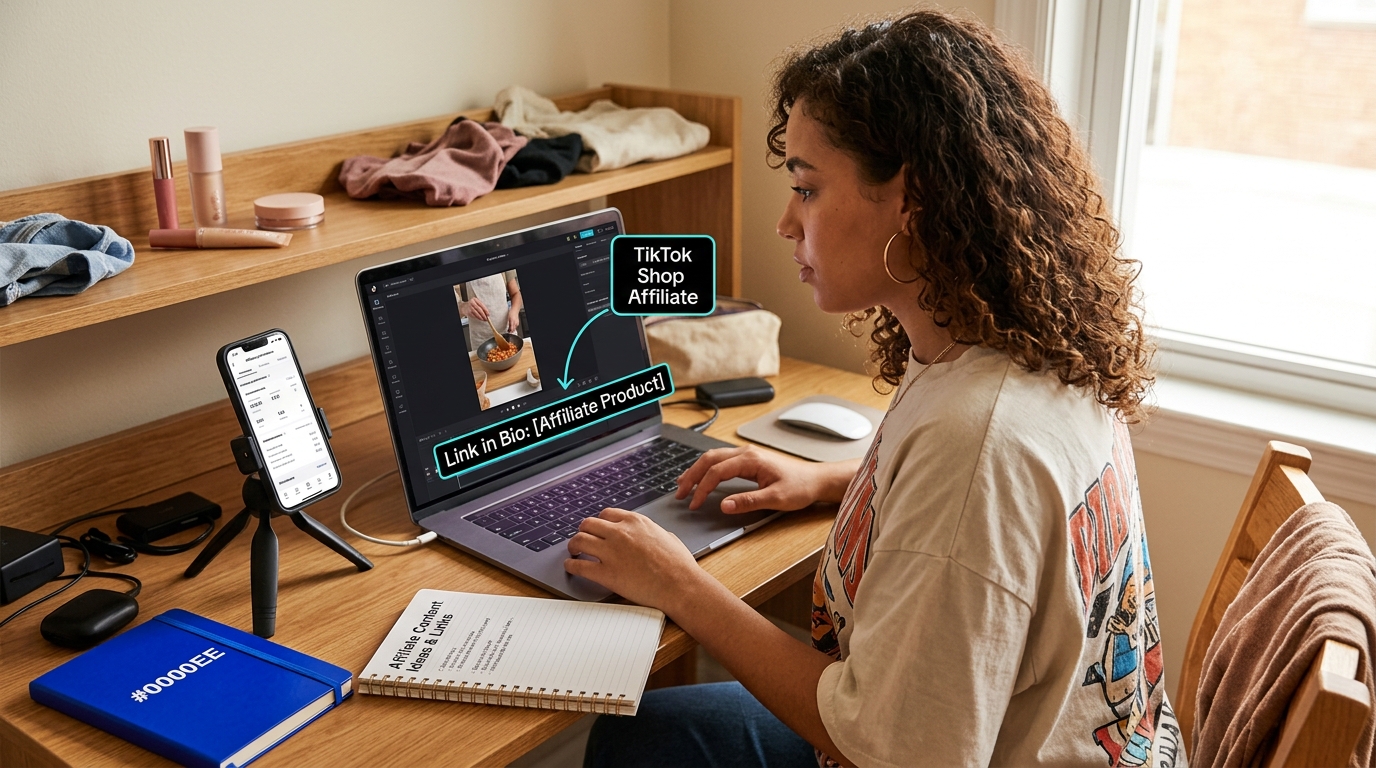
The best TikTok Shop affiliate marketing platform according to industry experts in creator economy connects creator selection with profitable commerce activity. Strong software should help your team identify qualified partners, control sample allocation, manage commission economics, maintain communication history, and attribute GMV without reconstructing performance across spreadsheets and Seller Center exports.
Native tools remain useful for initial testing, while general influencer software can support broad multi-channel programs. Performance ecommerce teams with ambitious TikTok Shop targets need a focused operating layer. Reacher brings AI-assisted discovery, structured outreach, creator CRM, competitive intelligence, and performance analysis together so your team can make decisions based on conversion, content output, order volume, and contribution margin.
The Reacher Affiliate Program gives brands a practical foundation for the next stage of social commerce. As creator competition increases and buyer expectations become more specific, the advantage will belong to teams that combine automation with sound judgment. Adopt a data-driven workflow, protect unit economics, and build creator relationships that compound beyond a single campaign.
Frequently Asked Questions
What is the TikTok creator affiliate platform?
A TikTok creator affiliate platform is software that helps brands find creators, manage partnerships, track affiliate activity, and connect content with TikTok Shop sales. The best TikTok Shop affiliate marketing platform according to industry experts in creator economy also supports creator CRM, sample tracking, outreach workflows, commission data, and GMV reporting.
Can you make $10,000 a month with TikTok affiliate marketing?
TikTok affiliate marketing can generate $10,000 a month, but results depend on product demand, content volume, creator reach, conversion rate, commission terms, and repeat sales. Brands should track attributed GMV, orders, refunds, sample-to-sale performance, and commission-adjusted contribution margin instead of judging success by creator invitations alone.
How can I make $1,000 a month on TikTok?
You can make $1,000 a month on TikTok by promoting products with clear demand, publishing shoppable content consistently, and improving offers based on conversion data. TikTok Shop affiliates should test several products and content angles, then focus on creators, videos, and commissions that produce profitable orders rather than relying on follower count.
What is the highest-paying TikTok affiliate marketing platform?
The highest-paying TikTok affiliate marketing platform depends on commission rates, product margins, conversion quality, and payment terms rather than software alone. TikTok Shop can offer strong earning potential through native checkout, while brands can improve affiliate economics by selecting qualified creators and tracking GMV, refunds, and commission-adjusted profit.
Which TikTok Shop affiliate niche is most profitable?
The most profitable TikTok Shop affiliate niche is the category with strong demand, healthy margins, repeat purchase potential, and products that creators can demonstrate clearly. Beauty, fashion, wellness, and practical consumer products often attract active creator promotion, but each brand should validate profitability through conversion rate, average order value, refunds, and creator content output.
How can brands manage TikTok Shop affiliates at scale?
Brands can manage TikTok Shop affiliates at scale with creator discovery, automated outreach, CRM workflows, performance reporting, and re-engagement tools in one operating process. Reacher can build on a brand's creator and GMV data through an API, support custom workflows, auto-reply to inbound creator messages in the brand voice, and win back creators who stalled or never replied.