
Reacher Stephen
TikTok Search Ads: Specs, Setup, and Campaign Strategy
Master TikTok search ads in TikTok Ads Manager. Learn exact ad specs, keyword setup, negative keyword controls, and strategies to drive TikTok Shop sales.
tiktok search ads
Search behavior on TikTok creates a direct path from a user’s question to product discovery. TikTok reports that 57% of users actively use its search function, while 23% begin a search within 30 seconds of opening the app. tiktok search ads place paid video content near those queries, helping ecommerce teams capture demand before a viewer returns to the feed.
Key Takeaways
- TikTok Search Ads place paid video content near user queries, letting brands capture demand from shoppers who search with clear purchase intent.
- Because 23% of TikTok users search within 30 seconds of opening the app, these ads target viewers at a moment of high attention and active interest.
- Successful campaigns rely on matching keywords to video content so the ad feels helpful rather than interruptive in the search results.
- Set up your campaign by identifying the specific product and category terms your ideal customer would type into the search bar.
- Plan your strategy around high-intent keywords that signal readiness to discover and buy, not just browse.
This guide covers mechanics and production requirements affecting approval, visibility, and click-through rate. Use the specifications below to prepare assets, then connect search behavior with creator selection through AI Creator Search. Describe your ideal creator and let AI rank the database, helping your team build stronger creator briefs.
What Are TikTok Search Ads and How Do They Work?
Definition and Mechanics of TikTok Search Ads
TikTok search ads are paid video placements triggered by search activity. In TikTok Ads Manager, an advertiser supplies campaign, ad group, creative, audience, bid, and keyword inputs. The platform evaluates query relevance, predicted response, bid, creative quality, and delivery eligibility before showing an ad. The ad typically resembles a native TikTok video, with a sponsored label and a call to action leading to a product page, landing page, app store listing, or TikTok Shop destination.
The intent signal differs from a passive feed impression. A viewer searching for a product type, use case, tutorial, or local recommendation has expressed a topic preference. Match the opening frame and spoken hook to that query. A search for “carry-on backpack” calls for an immediate product view and capacity benefit, not a long brand introduction. Search creative must answer the query within the first seconds while retaining TikTok’s vertical, creator-led style.
How TikTok Search Ads Compare to Google Search Ads
Google Search Ads generally begin with typed text and display text-based results, shopping listings, or extensions. TikTok search placements begin inside a video-first social experience, where visual demonstration, creator credibility, sound, captions, and comments influence the next action. TikTok also captures discovery queries such as “best gifts for runners” or “easy apartment organization,” where the user may still be forming a preference rather than naming a seller.
| Factor | TikTok search ads | Google Search Ads |
|---|---|---|
| Primary format | Vertical video within a social feed and search experience | Text, shopping, image, or video results on a search results page |
| Intent signal | Search query combined with viewing, engagement, and audience behavior | Typed query, location, device, audience, and account signals |
| Creative priority | First-frame clarity, demonstration, voiceover, captions, and creator delivery | Headline relevance, description copy, landing page alignment, and offer |
| Best use | Product discovery, consideration, social proof, and direct commerce | Capturing demand from users actively seeking a known solution |
Where Ads Appear on the Search Results Page
Search placements can appear among organic video results after a query is submitted. Exact position depends on auction delivery, relevance, eligibility, and available inventory. A viewer may see a sponsored video before or between related results, then continue browsing, click the call to action, or visit the advertiser’s profile. The placement is not a static text slot. The video must stand alone if watched without sound, entered from a broad query, or shown beside creator content.
TikTok Search Ad Creative Specifications and Safe Zones

Exact Video Dimensions, Aspect Ratios, and File Limits
For vertical search creative, use a 9:16 aspect ratio and minimum resolution of 720 by 1280 pixels. TikTok’s creative guidance supports common formats such as MP4 and MOV. Keep the file clean, legible, and free from borders that make it look repurposed. Check TikTok search ads specs in the current Ads Manager upload panel before launch because accepted file size, encoding, and placement requirements can change by campaign type or account.
| Asset element | Working requirement | Production check |
|---|---|---|
| Orientation | Vertical, 9:16 | Preview on a phone before upload |
| Resolution | At least 720 × 1280 pixels | Export from the original high-resolution file |
| Duration | 5 to 60 seconds recommended | Deliver the query answer in the opening seconds |
| File format | MP4 or MOV commonly accepted | Confirm the upload panel’s current limits |
| Text treatment | High contrast captions with readable sizing | Check readability on a smaller screen |
Safe Zone Boundaries for Text and Overlay Elements
Keep essential copy away from the top, bottom, and right-side interface areas. Search results can display profile details, captions, engagement controls, and a call-to-action button over the video. Place the headline near the upper-middle area, keep benefits in the central viewing region, and leave room around the lower edge. Preview each asset with TikTok’s placement overlays enabled. A discount, ingredient, product name, or instruction beneath interface controls can disappear even when the file passes review.
Recommended Video Duration and Template Guidelines
Use the shortest length that fully answers the query. A 10-second demonstration can work for a simple feature, while a comparison, tutorial, or testimonial may need more time. Structure the video around a search-specific hook, visual proof, one primary benefit, and a clear next action. Rotate opening frames, creators, captions, and demonstrations to prevent fatigue. AI Creator Search can filter creators by GMV, category, performance, audience, and post rate, providing talent for search-led concepts.
Step-by-Step Campaign Setup in TikTok Ads Manager
Build the campaign around the desired viewer action, then configure delivery and search terms. In TikTok Ads Manager, open Campaign, select an objective matching the business outcome, and choose a sales or website conversion path for measurable revenue. For TikTok Shop, select the commerce destination available in your account and connect the relevant product set before creating the ad group. Keep the structure narrow enough to show which keyword themes, creatives, and bids generate qualified traffic.
Choosing the Right Campaign Objective and Placement Settings
At campaign level, choose sales, traffic, or conversions based on tracking readiness. Sales fits an account whose pixel, Events API connection, or TikTok Shop data records purchase behavior. Traffic can support an early landing-page test, but may favor inexpensive clicks over buyers. In the ad group, confirm placement controls and search eligibility shown by Ads Manager. Search-focused campaigns need creative, landing page, and event signals aligned with the query.
Keyword Research and Match Types for Search Campaigns
Start with customer language rather than internal product terminology. Collect product names, problems, use cases, comparisons, materials, sizes, and seasonal phrases from TikTok search suggestions, site-search reports, reviews, and support tickets. Group close variants into ad groups so the opening hook matches the query theme. Broad matching can expand reach but requires monitoring. Phrase or exact controls provide tighter relevance when a limited budget must stay near high-intent terms. Review available match options in your account because interface labels and eligibility can change.
Use a search-term report after enough delivery data accumulates. Separate purchase queries, such as a product plus size or use case, from research terms such as “what is,” “DIY,” “jobs,” “free,” and “cheap.” Add irrelevant patterns to exclusions, then move promising language into new creative briefs. This gives tiktok search ads a feedback loop between targeting, video messaging, product pages, and conversion data.
Bidding Strategies and Budget Controls
Set the bid according to allowable cost per purchase, not the cheapest impression. Start with a daily budget that can generate enough events for comparison. Assess spend, impressions, click-through rate, add-to-cart activity, purchases, and return on ad spend. Conversion-focused bidding needs reliable event tracking. If purchase volume is limited, begin with a higher-funnel event while fixing measurement, then move toward purchase optimization.
- Campaign: Select the business objective, name the test clearly, and confirm the account’s measurement connection.
- Ad group: Choose the audience, budget, schedule, bid method, destination, and eligible search settings.
- Keywords: Add related terms, assign match controls, and separate discovery language from product-specific intent.
- Creative: Match the first spoken line and on-screen headline to the ad group theme.
- Launch review: Check URL parameters, product availability, event firing, policy status, and mobile presentation.
- Optimization: Review search queries and conversion quality before changing bids or expanding coverage.
Advanced Strategies: Negative Keywords and TikTok Shop Integration
Efficient search management depends on exclusions as well as targets. Low-intent modifiers can consume budget without creating a realistic purchase path, especially for products with a defined price or specialized use. Pair query exclusions with TikTok Shop catalog controls, creator-led proof, and a regular review schedule to connect intent, product availability, and the video shown.
Building a Negative Keyword List to Eliminate Low-Intent Spend
Create an exclusion list before launch. Add terms such as “free,” “cheap,” “DIY,” “jobs,” “career,” “template,” and “what is” when they do not match the offer. Add brand-safety exclusions, irrelevant categories, incompatible sizes, and unsupported locations. Do not block a word solely because it appears in a broad query. Check the complete phrase and conversion quality first. “Cheap” may suit a value-led product, while “repair manual” is usually unsuitable for direct retail.
- Review actual search queries on a fixed weekly schedule.
- Classify each term as purchase, comparison, research, support, employment, or unrelated intent.
- Exclude recurring low-value patterns at the narrowest practical level.
- Check whether exclusions remove useful variations before applying them broadly.
- Record the reason, date, and owner for each major exclusion.
Query Harvesting and Feeding Insights into Creator Briefs
Search reports contain audience language and can guide creative planning. Record high-quality queries, then sort them by purchase stage, objection, use case, and product attribute. Turn each cluster into a creator brief with an opening line, demonstration requirement, proof point, caption, and call to action. A query such as “backpack for airline personal item” should guide a packing demonstration and measured dimensions, not a generic lifestyle clip.
AI Creator Search turns those briefs into a focused talent workflow. Describe your ideal creator and let AI rank the database. Apply filters by GMV, category, performance, audience, and post rate. Creator scoring by GMV, engagement, and post rate gives your team a structured way to select partners for query-specific demonstrations. Feed winning hooks back into organic captions, product detail pages, and future paid tests.
Connecting Creator Spark Ads with Search Intent for Direct Sales
Use creator content when a query requires trust, demonstration, or social proof. Give the creator a search theme, product claim boundaries, required disclosures, and a measurable call to action. After authorization, connect the eligible post to the paid campaign and direct viewers to the matching product destination. For TikTok Shop, confirm that the item is in stock, correctly priced, approved for promotion, and connected to the intended product set.
Product Shopping Ads can shorten the path from discovery to product detail and checkout when the account has the required commerce setup. Match the item to the query, keep the product title accurate, and monitor product clicks, detail views, add-to-cart rate, purchases, and gross merchandise value. A creator video that answers the search question while presenting the shoppable item gives the auction relevance and a clear commercial action.
Dedicated Search Campaigns vs. Automatic Search Placement: Which Should You Use?
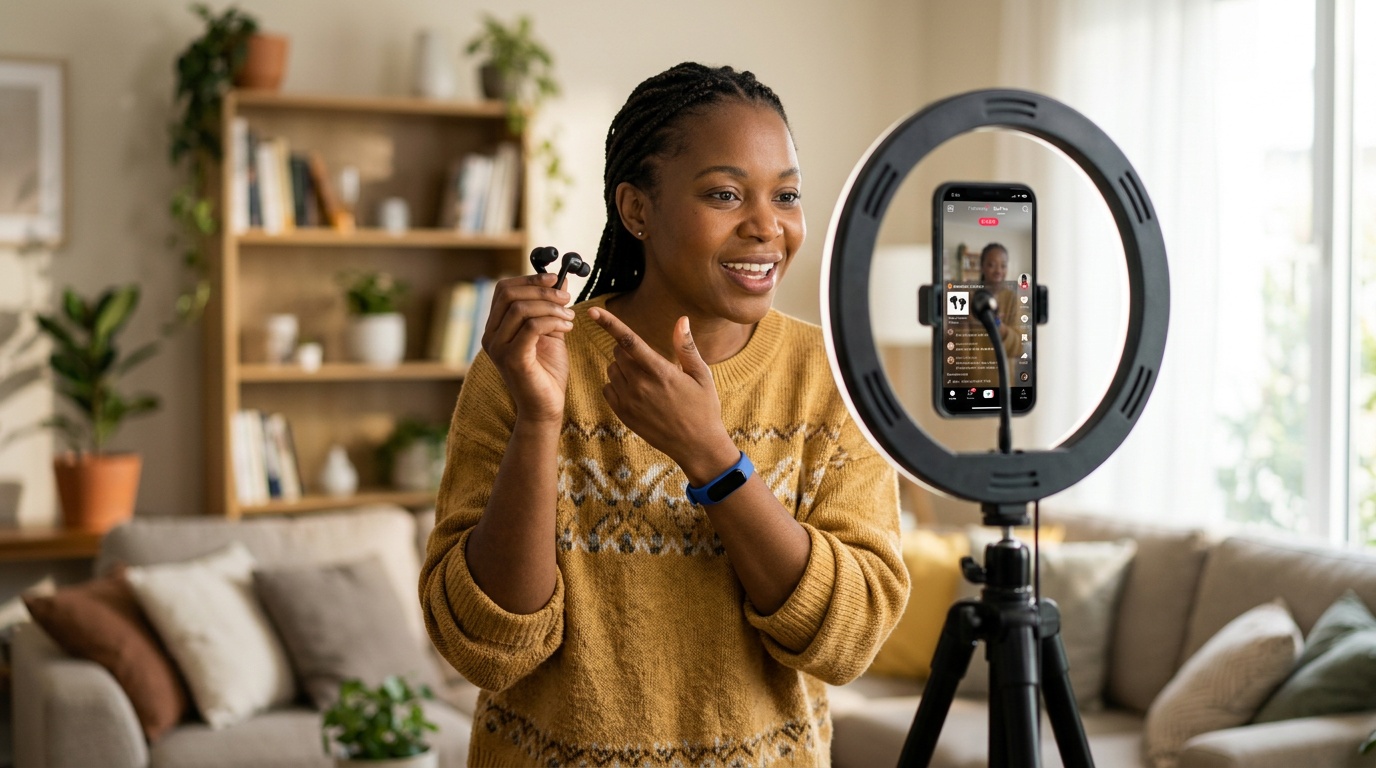
The right placement setting depends on the control your team needs over query coverage, budget allocation, and reporting. A dedicated campaign is suited to direct search testing. Automatic Search Placement can broaden delivery by allowing eligible ads to appear in search alongside other placements. Review the setting in TikTok Ads Manager before launch, because separating search delivery changes performance analysis.
When to Run a Dedicated Search Campaign
Choose a dedicated campaign when search is a defined sales channel, keyword groups are ready, and you need query-level reporting. This structure works for product-specific searches, seasonal demand, and strict cost-per-purchase targets. It also lets you match each ad group with a dedicated hook, landing page, TikTok Shop product, and negative keyword list. Use dedicated delivery when terms such as “free,” “DIY,” or “jobs” could consume budget without supporting a purchase.
When to Use Automatic Search Placement (Formerly the Search Ads Toggle)
Automatic Search Placement is useful for broader discovery or accounts without enough conversion volume for a tightly segmented test. It can identify search queries missed during initial research while distributing delivery across eligible inventory. Treat it as a discovery mode, not a replacement for query analysis. Monitor placement, search-term quality, spend, and purchase behavior, then move proven themes into a dedicated structure. AI Creator Search can connect winning themes with creators suited to product demonstrations. Use AI Creator Search to rank candidates by GMV, engagement, and posting performance before expanding creative coverage.
Side-by-Side Comparison Table and Decision Criteria
| Decision factor | Dedicated search campaign | Automatic Search Placement |
|---|---|---|
| Control | Direct keyword, budget, and creative structure | Broader automated delivery |
| Best fit | Proven intent themes and strict efficiency goals | Discovery, testing, and limited conversion data |
| Reporting | Cleaner search-specific analysis | Requires placement and query filtering |
| Recommendation | Use for scale after validation | Use to discover demand, then refine |
Start with automatic delivery only when exploration is the priority. Shift budget to dedicated tiktok search ads once search terms, creative angles, and conversion signals prove their value.
Frequently Asked Questions
Can you search ads on TikTok?
TikTok lets advertisers place sponsored videos near relevant search results, so users can encounter ads while searching for products, tutorials, or recommendations. TikTok search ads use query relevance, creative quality, audience signals, bid settings, and delivery eligibility to determine which sponsored videos appear.
How do TikTok search ads work?
TikTok search ads match paid vertical videos to searches made inside TikTok. Advertisers provide campaign, audience, creative, bid, and keyword settings, while TikTok evaluates relevance and predicted response before showing a sponsored video with a call to action.
How do I find an ad I saw on TikTok?
You can find a TikTok ad again by checking your liked or favorited videos, searching the product or brand name, or visiting the advertiser’s profile if you remember it. TikTok does not guarantee a dedicated history for every ad, so saving the video or opening its landing page is the most reliable approach.
Why am I suddenly getting ads on TikTok?
TikTok shows ads because advertising supports the platform and ad delivery responds to activity such as searches, video views, engagement, device signals, and audience settings. Search activity can also prompt sponsored videos related to products, use cases, tutorials, or recommendations you recently viewed.
How can I stop annoying TikTok ads?
You cannot remove every TikTok ad, but you can reduce unwanted ads by selecting options such as Not interested, managing ad personalization settings, and limiting activity-based recommendations where available. TikTok search ads may still appear, so clearer preferences and less engagement with irrelevant content can improve future ad relevance.
What makes a TikTok search ad effective?
An effective TikTok search ad answers the user’s query in the opening seconds with a clear visual hook, spoken message, captions, and product proof. Vertical 9:16 video, readable text within safe zones, a focused benefit, and a direct call to action help viewers understand the offer quickly.