
Reacher Jerry
How to Get Free Samples on TikTok: Requirements, Steps, and Zero-Follower Strategies
Learn how to get free samples on TikTok Shop with this complete guide — eligibility requirements, step-by-step instructions, and proven strategies for creators at any follower level.

how to get free samples on tiktok
If you’re researching how to get free samples on TikTok, start with the approval system rather than sending random requests. TikTok Shop eligibility and seller approval can vary by market, account, offer, and campaign terms. Understanding the available offer details helps you choose relevant products and avoid accepting products that don’t fit your content strategy.
Key Takeaways
- If you’re researching how to get free samples on TikTok , start with the approval system rather than sending random requests.
- TikTok Shop eligibility and seller approval can vary by market, account, offer, and campaign terms.
- Understanding the available offer details helps you choose relevant products and avoid accepting products that don’t fit your content strategy.
Free products aren’t guaranteed, and they aren’t simply gifts. Brands provide inventory to creators who can produce shoppable content, attract qualified traffic, and meet posting requirements. Use the FastMoss TikTok Data Analytics Platform to study product demand, creator activity, sales volume, and category trends before deciding which offers deserve your attention.
How the TikTok Shop Free Sample System Works
Eligibility requirements and sample access can vary by account, market, and offer. You may request a product through the TikTok Shop affiliate center, but the seller makes the final decision based on audience fit, content quality, sales history, category relevance, and available inventory.
What Are Free Samples on TikTok Shop?
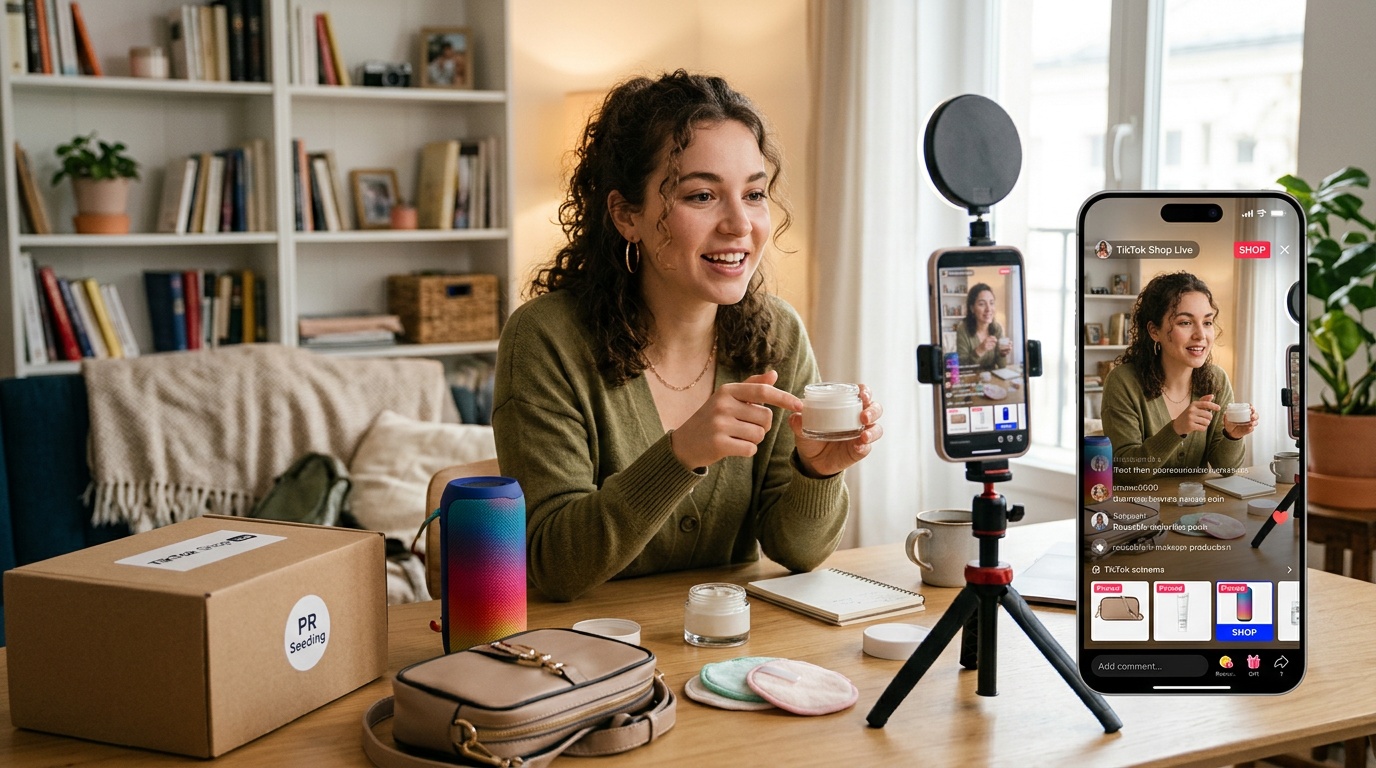
A free sample is a product a seller sends to an eligible creator without requiring an upfront purchase. In exchange, the creator is expected to create promotional content, usually a shoppable video or LIVE session, within a stated period. The creator can earn affiliate commission when viewers purchase through the linked product card. Sellers gain product demonstrations, reviews, unboxings, tutorials, and other user-generated content.
Receiving a sample doesn’t guarantee earnings. The product still needs a credible use case, competitive pricing, dependable fulfillment, and an audience likely to buy. Review return policies, commission rates, shipping details, product claims, and brand reputation before accepting an offer.
Free Samples vs. Refundable Samples: Which Path Fits You?
The distinction matters because the cash-flow risk differs. A free sample costs nothing upfront, while a refundable sample requires the creator to purchase the item first. The seller may issue a refund after the creator meets conditions such as publishing approved content or generating a qualifying sale. Read the offer terms carefully because refund timing, sales requirements, and content obligations vary by campaign.
| Sample type | Upfront cost | Typical creator obligation | Primary risk |
|---|---|---|---|
| Free sample | No product purchase required | Publish shoppable content within the stated deadline | Content still may not generate commission |
| Refundable sample | Creator pays before reimbursement | Meet the seller’s posting or sales conditions | Refund may depend on compliance or qualifying sales |
Why Brands Invest in Creator Sampling Programs
Sellers use sampling to reduce uncertainty before committing to larger creator campaigns. A product demonstration can show how an item performs in real use, answer buyer objections, and produce creative assets for paid promotion. Brands also assess whether a creator communicates clearly, discloses the partnership, responds to comments, and attracts viewers who match the product’s target customer.
Approval is tied to more than follower count. A smaller creator with strong audience trust and relevant product content can be more useful than a large account with weak purchase intent. For brand teams managing many offers, Reacher provides an affiliate metrics dashboard with GMV analytics and top creator reporting, putting every affiliate metric, GMV, and top creator on one screen before sample inventory is allocated.
What Are the Requirements for Free Samples on TikTok?
The requirements for free samples on TikTok Shop combine platform rules with seller discretion. Meeting the baseline may make the sample marketplace visible, but it doesn’t force a merchant to approve your request. Build eligibility in layers: maintain a healthy account, publish consistently, generate measurable sales, and select products that fit your audience.
Follower Thresholds
Follower requirements can vary by market, account, and offer. That answers the common question, “How many followers do you need to get free samples on TikTok?” Follower count isn’t an absolute rule in every creator experience. Focus on strong engagement, reliable posting, and a healthy account, while recognizing that seller approval still depends on campaign criteria and available inventory.
Account Health: Why a Green Rating Matters
A green rating signals that your account follows TikTok Shop policies and has avoided serious violations. Review product claims, disclosure practices, prohibited content rules, intellectual property guidelines, and fulfillment-related complaints. Removed videos, misleading promotions, canceled orders, or poor buyer experiences can weaken your position even with a large audience. Check your creator dashboard regularly and correct policy issues before requesting inventory.
Recent Activity
Recent activity is another eligibility signal. An inactive account fails to demonstrate that it can produce current content or drive commerce traffic. Maintain a visible publishing rhythm, respond to comments, and keep affiliate videos relevant to your niche. Activity should show that your audience knows what value to expect from your channel.
GMV and Sample Access
Gross merchandise value, or GMV, measures the sales value attributed to your content. Sellers may favor creators who already convert viewers into customers, but sample approval and access vary by campaign and available inventory.
Geographic Restrictions: Who Can Participate
Free samples are limited to TikTok Shop-supported markets. Your residence, account region, shipping address, and seller location can affect availability. If a product doesn’t ship to your market, the request may be unavailable regardless of follower count or GMV.
- Confirm that your country supports TikTok Shop creator commerce.
- Check your follower count and account health status.
- Review recent account activity.
- Track GMV, affiliate clicks, orders, and conversion rate.
- Request products that match your niche and audience demographics.
- Read shipping, content, refund, and disclosure terms before accepting.
How to Request Free Samples on TikTok Shop
Begin with products that match your audience, content style, and sales history. A thoughtful request shows sellers that you understand the product, the customer, and the content obligation. TikTok Shop approval isn’t automatic, so treat each application as a focused creator pitch rather than a request for complimentary merchandise.
Step-by-Step Guide to Submitting a Sample Request
- Open the creator or affiliate center. Sign in to TikTok Shop, review available product offers, and filter for sample opportunities that ship to your market.
- Assess the listing. Check the commission rate, product price, shipping terms, seller rating, customer reviews, return policy, and content instructions.
- Confirm audience fit. Choose an item that belongs naturally within your niche. A beauty creator should prioritize relevant cosmetics, while a home account may perform better with practical household products.
- Review your profile. Make sure your bio explains your niche, your recent videos show consistent production quality, and your account includes compliant disclosures for affiliate content.
- Submit the request. Add a concise message that identifies your audience, explains your proposed video or LIVE concept, and references relevant content or prior sales.
- Track the decision. Monitor the sample dashboard, seller messages, shipping updates, and deadlines. Accept only offers you can complete on schedule.
Best Practices for Getting Your Request Approved
Sellers want evidence of purchase intent, not just reach. Describe the demonstration you’ll create: an unboxing, comparison, tutorial, routine, review, or problem-solving video. Include average views only when they support the pitch, and point to videos with comments, clicks, or conversions. A clear plan is more persuasive than “Please send me this product.” Use sample management tools for creator campaigns to run sample requests as one queue, from pending to posted, with sample approval queue, creator sample request tracking, and shipment and posting workflow visibility.
Requesting Samples: Benefits and Tradeoffs
Pros
- Reduces the cost of testing products for affiliate content.
- Provides material for demonstrations, reviews, and LIVE selling.
- Can build seller relationships and improve your commerce portfolio.
Cons
- Approval and inventory availability are controlled by sellers.
- A sample doesn’t guarantee views, commissions, or sales.
- Deadlines and content obligations can affect future eligibility.
Posting Requirements: Consequences of Going Silent
After receiving a free sample, review the campaign terms for its required posting deadline and content format. Sellers may specify additional requirements, such as product tags, talking points, video format, or disclosure language.
Don’t accept an item before confirming that you can produce content within the deadline. Missing the obligation can reduce seller trust, affect access to future offers, and create account compliance concerns. If shipping is delayed or the product arrives damaged, document the issue promptly through the platform and contact the seller instead of remaining inactive.
Common Mistakes That Get Creators Rejected
Frequent problems include requesting unrelated products, submitting a blank or vague pitch, showing no recent affiliate activity, and ignoring seller instructions. Creators also weaken applications by using exaggerated claims, copying another account’s content, or failing to disclose a commercial relationship. Avoid requesting more products than you can feature. A smaller set of well-matched offers creates a stronger performance record than a crowded sample queue.
How to Get Free Samples on TikTok Without Paying
Creators below the usual threshold can still build proof of value, even if direct access to TikTok Shop samples is limited. There’s no reliable shortcut that guarantees free inventory with zero followers. The practical route is to create demand first, document your results, and present that evidence to sellers. This can lead to free products through direct partnerships, affiliate programs, or campaigns that don’t require an initial purchase.
The Sales-First Approach: Make Organic Content, Then Reinvest
Start with products you already own, low-cost items in your niche, or affiliate offers that don’t require a sample. Publish short demonstrations with a strong opening, a clear benefit, product close-ups, honest limitations, and a direct call to action. Track views, watch time, comments, clicks, conversions, and commission. Reinvest early earnings into products with better demand and repeat-purchase potential. This creates a sales record that can support later sample applications.
Direct Brand Outreach: How to Pitch Yourself Professionally
Find small and emerging sellers through TikTok Shop listings, brand websites, trade groups, and creator communities. Send a short proposal with your niche, audience location, content concept, sample links, expected deliverables, disclosure plan, and contact information. Ask whether the brand offers gifted product, a free sample TikTok affiliate arrangement, or a commission-only trial. Never promise a specific sales volume unless your data supports it.
Affiliate Networks and Third-Party Sampling Programs
Affiliate networks, product seeding platforms, and creator marketplaces may offer campaigns outside TikTok Shop’s standard sample system. Compare eligibility rules, shipping coverage, payout timing, usage rights, exclusivity clauses, and refund conditions before joining. Confirm that the program is legitimate, never pay an unexplained enrollment fee, and keep written records of every obligation. Don’t accept an offer that requires misleading reviews or undisclosed sponsorship.
Using Paid Promotions to Accelerate Discovery
A small paid test can help a strong product video reach a relevant audience, but advertising can’t repair weak creative or poor product fit. Select one proven video, define a modest budget, target the most relevant audience available, and monitor click-through rate, add-to-cart behavior, conversion, and return on ad spend. Stop campaigns that attract views without buyer activity. Product and creator analytics can help you compare demand before spending promotional dollars.
Best zero-follower sequence: publish useful product content, collect performance evidence, contact relevant sellers, and reinvest only after identifying an offer with credible demand. This builds commercial proof instead of chasing arbitrary follower milestones.
How Brands Select Creators for Sampling
Getting a free sample is only half the equation. The other half is understanding how sellers evaluate creators before assigning inventory. Brands look for audience match, dependable content production, credible product presentation, and signs that viewers take action. Build your profile around those signals, and your requests become easier for a seller to justify.
What Brands Look For in Sampling Partners
Brands typically review your niche, audience demographics, recent video quality, engagement pattern, product relevance, and conversion behavior. A creator who consistently explains skincare routines, tests kitchen tools, or demonstrates fitness accessories gives a seller more confidence than an account that promotes unrelated products each day. Sellers also examine comment quality, viewer questions, click activity, disclosure habits, and professional communication.
Prepare a compact partnership profile before requesting samples. Include strong video links, your niche, audience location, average views when relevant, and the format you propose. Mention whether you plan to create an unboxing, comparison, tutorial, review, or LIVE demonstration. Research product sales trends, competing listings, creator activity, pricing, and category demand before pitching. A specific proposal gives the seller a reason to approve you.
Creator Selection and Reporting
When a brand manages many products, campaigns, and sample requests, Reacher keeps affiliate metrics, GMV analytics, and top creator reporting on one screen. This helps teams review affiliate activity alongside their sample workflow.
For creators, this changes what “getting noticed” means. Make your profile easy to understand: state your niche clearly, use consistent content themes, tag products accurately, and show genuine demonstrations rather than generic promotional clips. Brands compare creator activity and product momentum before sending samples, so a focused portfolio gives reviewers better evidence of fit.
How to Accept Free Products Without Losing Trust
Free merchandise can create skepticism if every review sounds positive or scripted. Protect audience trust by disclosing the gifted product or affiliate relationship clearly, then evaluate the item independently. Show the packaging, setup, real use, limitations, price, and situations in which the product may not suit the buyer. A balanced review often carries more credibility than exaggerated praise.
Set a personal acceptance standard. Decline products that don’t fit your audience, make unsupported claims, or require misleading talking points. This may reduce the number of offers you accept, but it strengthens repeat viewership, comment quality, affiliate trust, and long-term seller relationships.
How to Turn Samples Into Long-Term Partnerships
One sample should produce a learning cycle, not a single upload. Before filming, define the buyer problem, the product proof you need, the intended call to action, and the audience segment most likely to purchase. After publishing, review watch time, retention, clicks, comments, orders, and customer objections. Use those findings to create a comparison, FAQ video, usage tutorial, or LIVE session that answers real viewer questions.
Send the seller a concise performance recap with the published links, notable audience feedback, and a proposal for the next campaign. Suggest a repeatable content series, seasonal angle, bundle promotion, or paid usage arrangement only when the initial content demonstrates clear value. Brands remember creators who meet deadlines, communicate early, protect disclosure standards, and turn product information into useful buyer guidance.
Creator verdict: Treat sampling as a professional partnership, not a product hunt. Strong applications combine niche relevance, original content, transparent reviews, dependable follow-through, and evidence of buyer intent. Build those assets before requesting more inventory, and sellers have a practical reason to choose you over a larger but less focused account.